
Have you ever washed a beautiful cotton suit and watched the water slowly turn pink, blue, green or black?
It can be worrying.
You may start thinking:
- Is the colour coming out?
- Will the suit become dull?
- Will the dark top stain the light bottom?
- Have I damaged an expensive outfit?
Colour bleeding can happen when loose dye leaves one fabric and moves into the wash water or onto another fabric. New and dark-coloured clothes may release some extra dye during their early washes. Cotton fabrics can also react differently based on the dye, print, finish and cleaning method used.
The good news is that careful cleaning can reduce the risk.
This guide will explain how to prevent colour bleeding in premium cotton suits, especially three-piece unstitched suit sets with a top, bottom and dupatta.
A premium suit stays premium when care begins before the first wash.
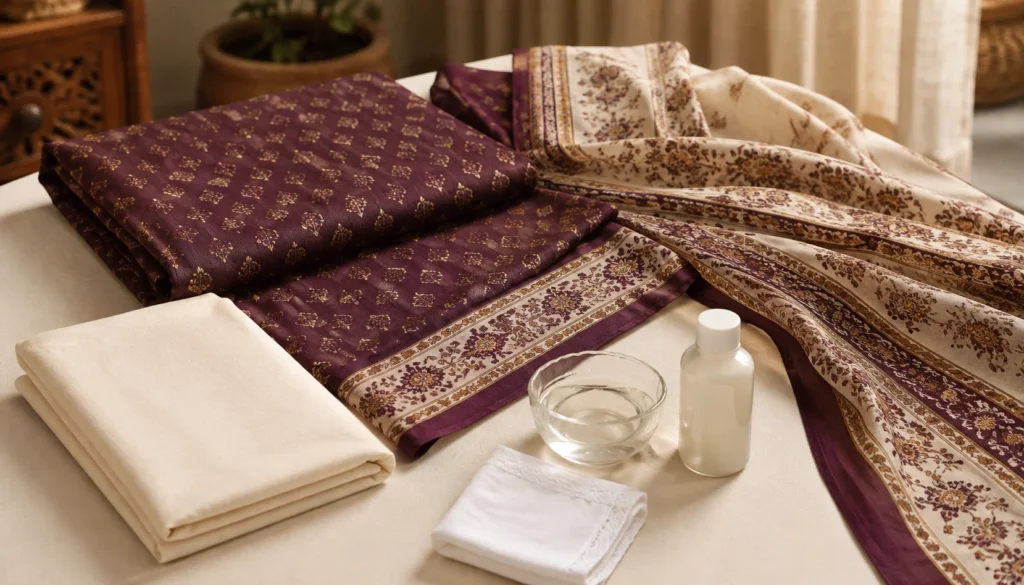
Colour bleeding happens when dye moves out of one fabric.
What Is Colour Bleeding?
The loose colour may:
- Mix into the wash water
- Make the original fabric look lighter
- Stain another part of the suit
- Transfer onto a white or pastel fabric
- Leave uneven colour patches
The textile term colourfastness means how well a fabric resists colour change and how well it prevents dye from moving onto nearby material.
A fabric with good colourfastness should keep most of its colour during normal use and correct cleaning. However, no coloured fabric should be treated carelessly.
Even a good premium cotton fabric may lose its beauty faster if you use:
- Very hot water
- Harsh detergent
- Chlorine bleach
- Long soaking
- Hard scrubbing
- Direct sunlight
- High dryer heat
- The wrong washing cycle
The safest method always depends on the fabric and its care instructions.
Why Do Cotton Suits Sometimes Bleed Colour?
Cotton accepts many kinds of dyes and prints. Different dyes attach to cotton in different ways.
Colour loss during washing may be linked to:
- The type of dye used
- Extra unfixed dye left on the fabric surface
- Incomplete rinsing during production
- A strong laundry product
- Water that is too hot
- Rough washing or rubbing
- Washing dark and light fabrics together
Textile-care information from CottonWorks explains that colour loss may relate to the dye, dyehouse rinsing or unsuitable laundry products. It also explains that different dye families have different colourfastness qualities.
This is why one washing rule cannot work for every cotton suit.
A plain cotton suit, a hand-block-printed suit and a cotton suit with embroidery may all need different care.
First Rule: Read the Product Care Instructions
Before washing your suit, check:
- The product page
- The care label
- The package
- The invoice or care card
- Any instructions shared by the seller
When the product says dry clean only or dry cleaning recommended, follow that advice.
Premium cotton suits may contain more than simple cotton fabric. They may include:
- Zari
- Sequins
- Beads
- Lace
- Hand embroidery
- Printed borders
- Foil work
- Decorative threads
- Organza or chiffon dupattas
- Mixed-fabric panels
The cotton base may look washable, but the decorative work may not be suitable for normal home washing.
At Heerika Fabrics, dry cleaning is recommended for premium unstitched suit sets unless the specific product instructions allow another method.
The safest wash is the one your fabric was designed for.
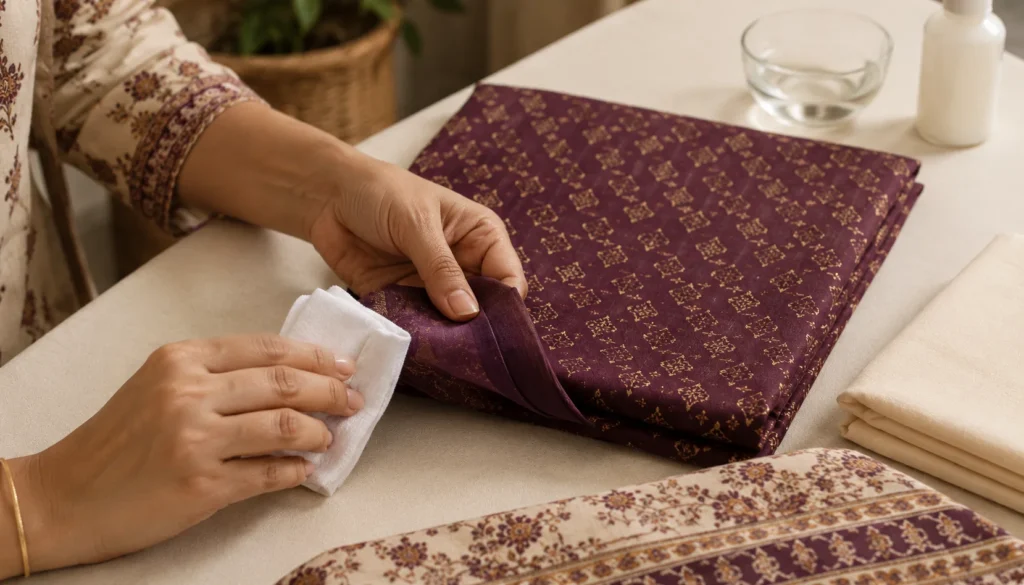
How to Test a Cotton Suit for Colour Bleeding
A small test can help you spot a problem before cleaning the full suit.
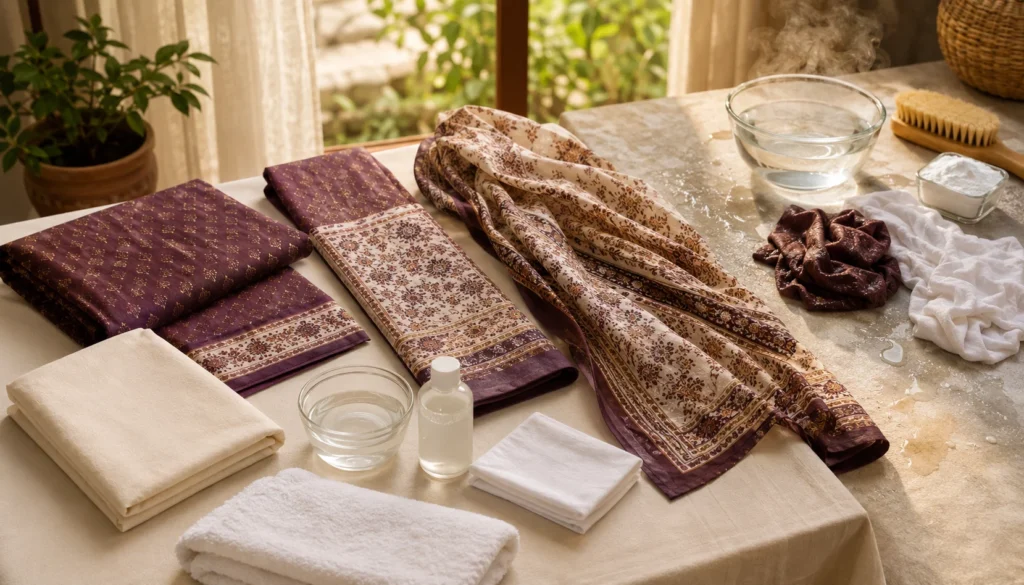
Simple colourfastness test
- Select a hidden corner of the fabric.
- Wet a clean white cotton cloth with cool water.
- Press the wet white cloth gently against the hidden area.
- Hold it for a few seconds.
- Lift the cloth and check for colour.
- Repeat with a tiny amount of the detergent you plan to use.
- Allow the tested fabric to dry before checking its final shade.
Laundry-care guidance recommends testing a hidden area before washing or using a stain-treatment product.
If strong colour transfers onto the white cloth, do not wash the complete suit at home. Ask the seller or a trusted professional dry cleaner for advice.
Do not test:
- On the front neckline
- Over embroidery
- On a visible border
- On a printed motif
- With a large amount of detergent
The test itself should not create a mark.
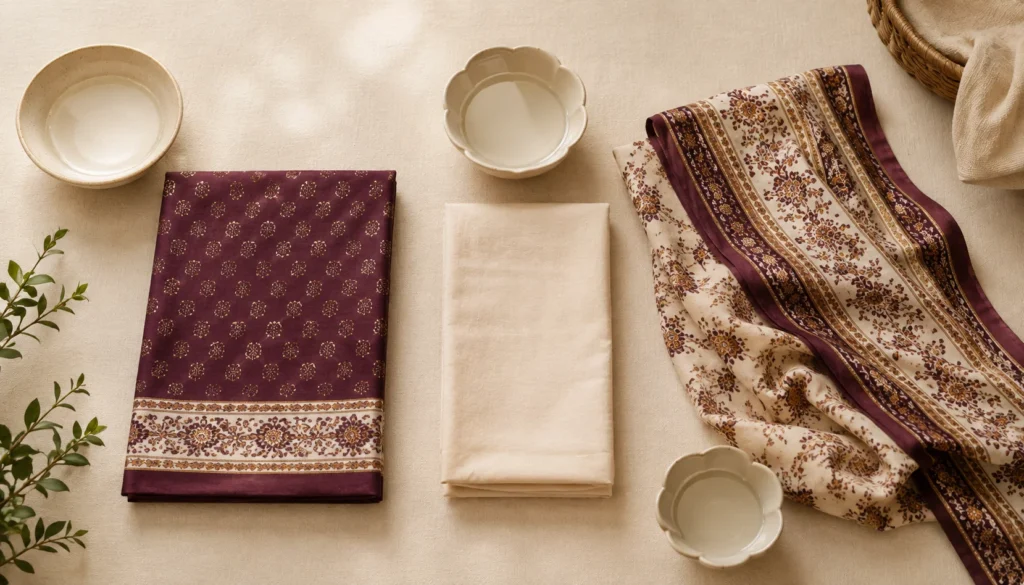
12 Ways to Prevent Colour Bleeding in Premium Cotton Suits
1. Dry Clean When It Is Recommended
This is the most important step.
Do not assume that every cotton fabric is safe to wash at home. The suit may contain mixed materials or delicate work.
Choose professional dry cleaning when the suit has:
- Heavy embroidery
- Zari or metallic work
- Delicate lace
- Beads or sequins
- A contrast decorative border
- A special printed dupatta
- Multiple fabrics
- A “dry clean recommended” instruction
Show all three components to the dry cleaner. Tell them that the top, bottom and dupatta belong to one set.
Ask them to clean the pieces in a way that protects their matching shades.
2. Keep the Top, Bottom and Dupatta Separate at First
An unstitched suit is not one single fabric.
The three components may have:
- Different colours
- Different dye types
- Different fabric blends
- Different prints
- Different levels of colourfastness
For example, a maroon cotton top may be paired with a cream bottom and a printed dupatta. Washing all three together can allow the dark colour to move onto the lighter part.
During the first cleaning, handle each component separately unless the care instructions clearly say otherwise.
This is especially important for:
- Dark top with light bottom
- Multicolour dupatta
- Red, black, navy or wine shades
- Contrast borders
- Block-printed fabrics
- White embroidery on dark cloth
New, bright or dark items are commonly advised to be washed separately during their first few washes to reduce dye transfer.
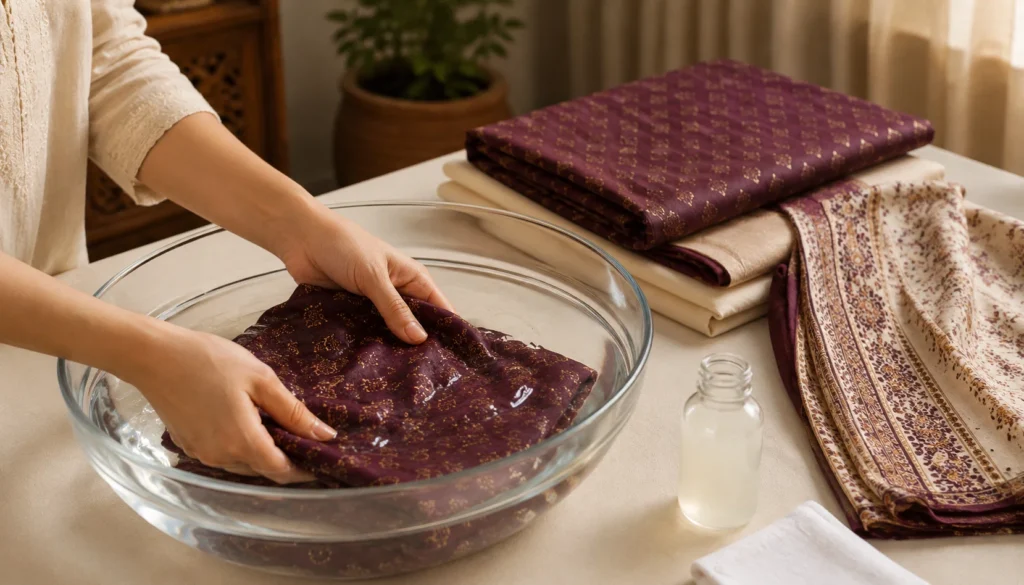
3. Use Cool or Cold Water
Hot water can increase fading and colour release in many coloured fabrics.
Cool water is usually the safer choice when home washing is permitted. It is commonly recommended for dark and coloured clothes to help reduce bleeding and fading.
Use water that feels cool to your hand.
Avoid:
- Boiling water
- Very warm buckets
- Hot machine cycles
- Sudden temperature changes
Always follow the product instructions when they specify a particular water temperature.
4. Choose a Mild Liquid Detergent
Use a small amount of gentle detergent made for coloured or delicate clothes.
A liquid detergent is often easier to spread through cool water than too much powder. Undissolved powder may leave residue, especially on dark fabrics.
Avoid using more detergent because you think more soap means better cleaning. Excess detergent may be difficult to rinse and may leave the fabric looking dull.
Before using any detergent:
- Read its label
- Check that it is suitable for colours
- Test it on a hidden part
- Use only the recommended amount
- Never pour a concentrated product directly onto a visible area
For a lightly worn premium suit, gentle cleaning is more important than heavy cleaning.
5. Avoid Chlorine Bleach
Do not use ordinary chlorine bleach on a coloured cotton suit.
It may:
- Remove colour
- Create pale patches
- Damage embroidery
- Change the shade
- Weaken some decorative materials
Laundry-care guidance recommends avoiding incorrect bleach use and testing colourfastness before using any bleach product. Oxygen or colour-safe bleach may be suitable for certain washable coloured fabrics, but it should still be used only when the product instructions permit it.
For a premium suit with handwork or mixed fabric, do not experiment with bleach at home.
Consult a professional instead.
6. Do Not Soak the Suit for a Long Time
Many people leave cotton clothing in a bucket for hours.
That may not be safe for a premium coloured suit.
Long soaking gives loose dye more time to enter the water and reach another part of the fabric. It can also affect:
- Contrast borders
- Printed areas
- Threads
- Decorative work
- Fabric texture
When home washing is allowed, keep the contact with water brief.
Prepare everything before you begin:
- Cool water
- Mild detergent
- Separate clean buckets
- Dry towel
- Shaded drying space
Clean one component at a time and remove it from the water without unnecessary delay.
7. Do Not Rub, Scrub or Twist the Fabric
Strong rubbing creates friction.
Friction can affect the colour and surface of cotton, especially printed or dark material. Washing and drying movement may also cause changes in surface appearance and colour.
Instead:
- Move the fabric gently through the water
- Press dirty areas softly
- Do not use a hard brush
- Do not rub two fabric sections together
- Do not twist or wring the suit
- Do not pull embroidery
To remove extra water, place the fabric on a clean towel and press gently.
Never twist a delicate dupatta like a household cleaning cloth.
8. Turn Stitched Suits Inside Out
After your suit has been stitched, turn it inside out before cleaning when home washing is allowed.
This helps the inside surface take more of the wash movement. It may reduce direct rubbing on:
- The outer colour
- Neck embroidery
- Printed motifs
- Decorative borders
- Sleeve details
Turning coloured garments inside out and using a shorter cycle can help reduce visible fading caused by washing friction.
Close hooks or secure loose tassels before cleaning. Place delicate tassels inside a soft cloth bag where possible.
For an unstitched suit, fold the decorated side inward before gentle handling.
9. Use a Gentle and Short Wash
When machine washing is clearly allowed, select:
- A gentle cycle
- A delicate cycle
- A short cycle
- Cool water
- A low spin setting
Do not overload the machine.
The suit needs enough space to move without being crushed against heavy clothing.
Never wash a premium cotton suit with:
- Towels
- Denim
- Bedsheets
- Rough garments
- Clothes with hooks or zips
- Very dirty household laundry
Sorting by colour and fabric type helps reduce dye transfer and physical damage.
For premium suits, hand cleaning or dry cleaning may still be safer than machine washing.
10. Rinse Each Colour Separately
Do not use the same coloured wash water for another component.
If you clean a dark top first, replace the water before cleaning the bottom or dupatta.
Continue rinsing gently until most loose detergent has left the fabric. Do not keep the suit under harsh running water for a long time.
Watch the water:
- A very light tint may come from surface dye.
- Strong or repeated colour release needs attention.
- If the shade appears to be changing, stop.
Do not assume that repeated washing will always solve the problem. Unstable colour loss may be difficult or impossible to reverse.
11. Air-Dry in the Shade
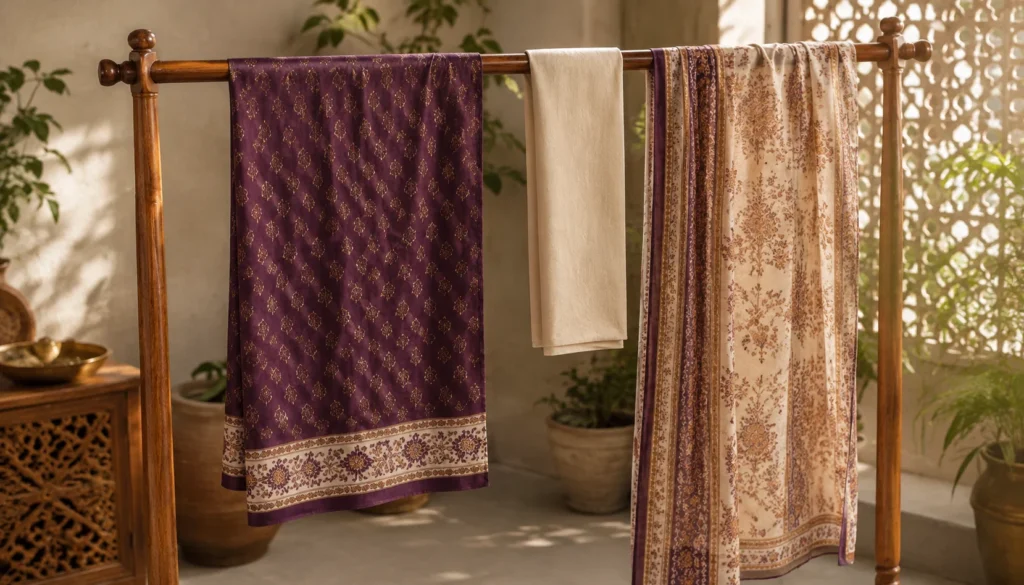
After cleaning, allow the suit to dry naturally in a shaded, airy place.
Direct sun can fade colour. CottonWorks notes that sunlight is a major cause of colour loss, and the amount of damage depends on several factors, including the colourant and exposure conditions.
Follow these drying steps:
- Remove extra water gently.
- Straighten the fabric without pulling it.
- Dry each component separately.
- Keep light and dark fabrics from touching.
- Choose shade with good airflow.
- Do not leave the suit wet in a pile.
- Do not use strong dryer heat.
Cold washing followed by air drying is also commonly advised for helping dark clothes retain colour.
Do not place a wet dark dupatta over a cream bottom.
Even after washing is finished, wet fabrics may transfer colour while touching.
12. Store the Suit Only When Fully Dry
Moist fabric should never be folded and stored.
It may cause:
- Colour transfer
- Damp smell
- Marks
- Mould
- Damage to embroidery
- Wrinkles that become difficult to remove
Make sure every component is completely dry.
Store dark and light components with a layer of clean white muslin or tissue between them when needed.
Avoid:
- Coloured newspaper
- Damp cupboards
- Plastic storage for long periods without airflow
- Direct sunlight
- Heavy items placed on embroidery
A breathable cotton storage bag is often better for a premium suit than tightly packed plastic.
Special Care for Unstitched Cotton Suit Sets
An unstitched set needs extra planning because the fabric has not yet become a garment.
Before cutting, ask your tailor:
- Does the fabric need pre-shrinking?
- Does it need lining?
- Should the components be cleaned before stitching?
- Will washing affect the planned length?
- How should the border be placed?
- Does the dupatta need separate care?
Do not pre-wash premium fabric without checking the product instructions. Washing before stitching may change length, finish or colour.
At the same time, do not allow a tailor to wash, soak or iron the fabric without your permission.
Explain that it is a coordinated three-piece premium suit set.
Keep a photograph of:
- The complete fabric
- The original colour
- The neckline design
- The borders
- The included components
This gives you a useful reference before stitching begins.
Colours That Need Extra Attention
Some shades show fading or transfer more easily than others.
These may include:
- Black
- Navy blue
- Deep green
- Bright red
- Magenta
- Wine
- Purple
- Turquoise
- Dark brown
- Neon colours
The American Cleaning Institute notes that unstable colour loss is often seen in strong shades such as reds, greens, blues, purples, pinks and black.
This does not mean every dark suit will bleed.
It means you should be more careful with:
- The first cleaning
- Water temperature
- Separate washing
- Drying
- Contact with light fabric
Pastel suits also need care because a small transferred mark can be easy to see.
Printed Cotton Suits Need Gentle Care
Printed cotton can behave differently from solid dyed fabric.
Some prints use colour on the surface of the fabric. Too much rubbing can affect their appearance.
Pay special attention to:
- Hand-block prints
- Pigment prints
- Gold or foil prints
- Contrast printed borders
- Floral dupattas
- Screen prints
- Dark prints on pale fabric
Textile printing requires correct fixation and afterwashing to achieve good wash and rubbing fastness. Different printing systems may also use different types of colourants.
At home, the best approach is simple:
- Test first
- Use cool water
- Avoid friction
- Avoid long soaking
- Dry in shade
- Follow the care instructions
Do Salt and Vinegar Stop Colour Bleeding?
Many home-care tips suggest adding salt or vinegar to every wash.
These methods should not be treated as a guaranteed fix.
Cotton fabrics may use several dye and printing systems. A method that affects one type of dye may do little for another. Commercial dye fixation happens during textile processing, not simply by adding a kitchen ingredient after buying the fabric. Cotton dye types differ in how they attach to the fibre and how well they resist washing.
Vinegar may be used for certain laundry problems or specific dyeing processes, but that does not mean it can permanently set every commercial cotton dye.
The safer approach is to:
- Follow the seller’s instructions
- Test the fabric
- Use the correct cleaning method
- Ask a professional when unsure
Do not mix random cleaning chemicals.
What to Do If Your Cotton Suit Starts Bleeding
Do not panic.
Act calmly and quickly.
Step 1: Remove the fabrics from each other
Separate the top, bottom and dupatta immediately.
Do not allow a dark wet fabric to remain against a light one.
Step 2: Stop the current wash
Do not continue a long wash hoping that the colour will stop on its own.
Step 3: Rinse separately in cool water
Handle each component gently.
Do not scrub the affected area.
Step 4: Do not apply heat
Do not iron or machine-dry the fabric.
Heat may make some transferred stains harder to remove. Laundry guidance recommends treating transferred dye promptly and testing any treatment on a hidden area first.
Step 5: Contact the seller or a professional
Share:
- Your order details
- Clear photographs
- A video where possible
- The cleaning method used
- The detergent used
- The water temperature
Do not apply bleach or a strong stain remover before asking for guidance.
Step 6: Check the care instructions
A claim may be affected if the fabric was cleaned against the stated instructions. Keep the product page or care card for reference.
Common Mistakes That Can Ruin a Premium Cotton Suit
Avoid these errors:
Washing all three pieces together
A dark top can stain a pale bottom or dupatta.
Using hot water
Hot water may increase fading or dye movement in coloured fabrics.
Soaking overnight
Long soaking gives dye more time to move.
Pouring detergent directly onto the fabric
Concentrated detergent may leave marks or affect colour.
Scrubbing the neckline
This may damage embroidery, print and surface colour.
Using chlorine bleach
It can remove colour and create uneven pale areas.
Drying in strong sunlight
Sun exposure can fade coloured fabric.
Drying dark and light pieces on top of each other
Wet contact may cause transfer.
Washing before reading the care directions
Some premium cotton suits should be dry-cleaned.
Allowing the tailor to pre-wash without asking
A careless pre-wash may alter colour, length or finish.
Quick Cotton Suit Care Checklist
Before cleaning your premium cotton suit, ask:
- Have I read the care instructions?
- Is dry cleaning recommended?
- Have I separated the top, bottom and dupatta?
- Have I tested a hidden area?
- Am I using cool water?
- Is my detergent mild and colour-safe?
- Am I avoiding bleach?
- Will I keep the cleaning time short?
- Can I dry each component separately in shade?
- Is the fabric fully dry before storage?
When the answer to any important question is “no” or “I am not sure,” pause before washing.
Key Takeaways
- Colour bleeding means dye is leaving one fabric and may move onto another.
- Always follow the product’s care instructions.
- Dry cleaning is the safest choice when it is recommended.
- Test a hidden corner before home washing.
- Keep the top, bottom and dupatta separate during early cleaning.
- Use cool water when washing is permitted.
- Choose a small amount of gentle, colour-safe detergent.
- Avoid chlorine bleach, hard scrubbing and long soaking.
- Dry each component separately in shade.
- Do not use heat when colour transfer has already happened.
- Do not depend on salt or vinegar as a universal dye-setting method.
- Ask the seller or a professional cleaner when you are unsure.
Good fabric care does not begin after damage. It begins before the fabric touches water.
Frequently Asked Questions
1. Do all cotton suits bleed colour?
No. Many cotton suits have good colourfastness and show little or no visible bleeding when cleaned correctly.
However, colour performance depends on the dye, print, production process and care method. Dark or very bright fabrics may need extra caution.
2. Is a little colour in the first wash normal?
Some new coloured fabrics may release a small amount of surface dye during their first wash.
Strong bleeding, visible fading or staining of another component is more serious. Stop washing and seek advice if you see a major change.
3. Can I wash the top, bottom and dupatta together?
It is safer to keep them separate during the first cleaning, especially when their colours are different.
A dark top and light bottom should not share the same wash water.
4. Should I wash a cotton suit in hot or cold water?
When home washing is allowed, cool or cold water is generally safer for coloured clothing because it can help reduce bleeding and fading. Always follow the product-specific care instructions.
5. Is dry cleaning better for premium cotton suits?
Dry cleaning may be the safer choice when the suit has embroidery, metallic work, lace, beads, mixed fabrics or a special dupatta.
It should also be used when the product instructions recommend it.
6. Can detergent cause a cotton suit to fade?
An unsuitable or harsh laundry product may contribute to colour loss.
Use a mild detergent made for coloured clothes, use the correct quantity and test it on a hidden area first.
7. Can I soak a cotton suit overnight?
It is not recommended for a premium coloured suit.
Long soaking may increase dye movement and may affect borders, prints or decorative work.
8. Can I use bleach on a coloured cotton suit?
Do not use chlorine bleach on a coloured suit unless the product instructions clearly state that it is safe.
Even colour-safe products should be patch-tested and avoided on delicate work unless professionally advised.
9. What should I do if the dupatta stains the bottom fabric?
Separate the pieces immediately.
Do not dry them with heat. Rinse separately in cool water and contact the seller or a trusted professional cleaner before applying a stain remover.
10. Should unstitched cotton fabric be washed before stitching?
Not always.
Some cotton fabrics may be pre-shrunk, while others may need treatment before stitching. Premium fabrics with embroidery or decorative work may require dry cleaning instead.
Read the product instructions and consult both the seller and your tailor before washing or cutting.
11. Does drying in sunlight affect suit colour?
Strong or repeated sunlight may contribute to colour loss. Dry coloured premium fabrics in a shaded place with good airflow.
12. How can I keep a cotton suit looking new for longer?
Clean it only when needed, follow its care instructions, use gentle methods, avoid long sunlight exposure and store it fully dry.
Keep delicate embroidery covered and do not place heavy clothing over it.
Conclusion
A premium cotton suit is chosen for its comfort, colour, design and graceful look. A little care can help protect all four.
The most important lesson is simple: do not wash every cotton suit in the same way.
Check the instructions. Test the colour. Separate the components. Use cool water only when home washing is allowed. Avoid harsh products and dry the fabric safely in shade.
For Heerika Fabrics suit sets, dry cleaning is recommended unless the individual product information provides another care method. This is especially important for designs with embroidery, special borders, delicate dupattas or mixed materials.
When you care for the fabric correctly, you protect more than its colour. You also protect its fall, finish, texture and designer appearance.
Explore Heerika Fabrics’ premium unstitched cotton suit collection and create a look that is designed around you.